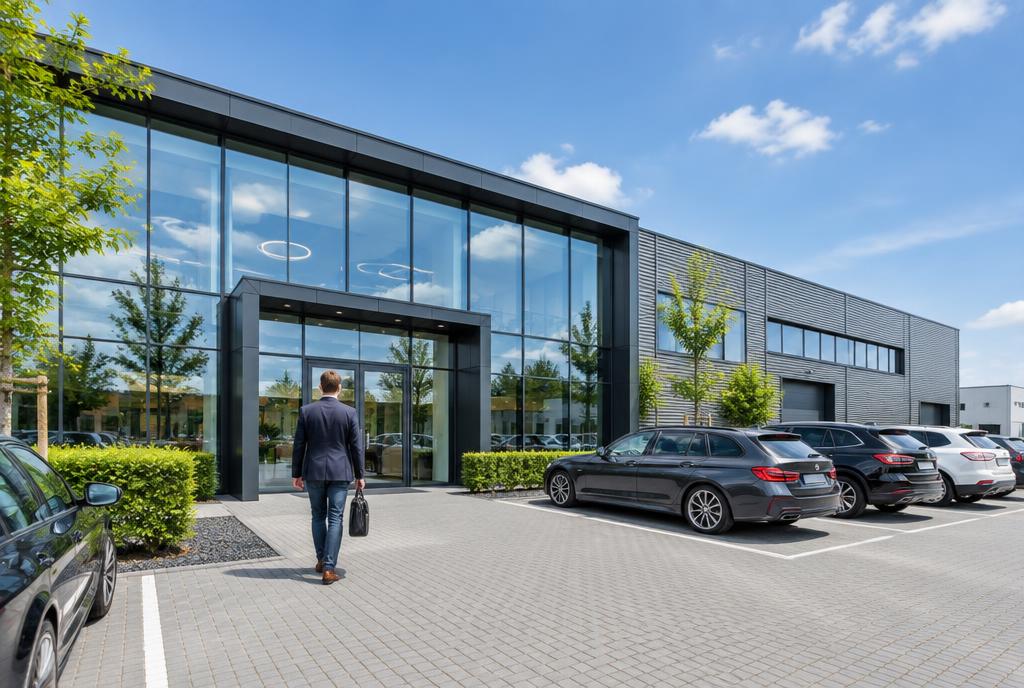
What exactly is sale & leaseback?
With sale & leaseback you sell your business premises to a buyer and rent them back in the same transaction. You are no longer the owner but the tenant — and the full capital locked in the property is released at once as working capital for your business.
For SME owners this is one of the fastest ways to unlock significant capital without relocating and without asking the bank for extra financing.
The benefits at a glance
- Immediate liquidity: the full equity (and more) is released, often within a few weeks.
- Continuity: you keep working at the same location; customers and staff notice nothing.
- No bank needed: no credit assessment, no weeks of paperwork.
- Predictable costs: a fixed rent instead of maintenance and ownership risks.
- Stronger balance sheet: converting real estate into cash strengthens your financial position and flexibility.
- Focus on your core business: you no longer manage property — you do business.
The drawbacks — honestly stated
- You no longer build real estate wealth in that property; appreciation Wiroli" data-autolink="true">benefits the new owner.
- Rent costs replace the (often lower or absent) mortgage costs.
- Less control over the property in the long term; lease renewal is a negotiation.
- Tax consequences: the profit on sale may be taxable. Always have this calculated by your accountant beforehand.
Who is sale & leaseback suitable for?
The construction suits entrepreneurs who:
- Need growth capital for machinery, stock, staff or an acquisition
- Own a property with substantial equity but little remaining borrowing capacity at the bank
- Want to keep their location but no longer want to be an owner
- Want to act fast — for example when a time-limited acquisition opportunity arises
It is less suitable if the location itself is your main investment, or if you plan to sell and relocate soon anyway — in that case a direct sale makes more sense.
Step-by-step plan: how a sale & leaseback works
- Exploration and valuation — you request a no-obligation offer; the buyer determines the market value of the property.
- Offer and lease proposal — you receive a purchase offer and a lease proposal (amount, term, conditions).
- Tax and legal check — your accountant and lawyer assess the consequences for your situation.
- Signing — the purchase agreement and lease agreement are signed at the same time.
- Transfer at the notary — the purchase price is paid out, any mortgage is repaid, and from that moment you are the tenant.
At Wiroli you receive a first no-obligation offer after assessment, and you set the pace of the transfer yourself.
Frequently asked questions
How long is the lease period in a leaseback? That is negotiable. Terms of 5 to 15 years are common, often with renewal options.
Can I buy the property back later? That can be recorded as a buy-back option or right of first refusal in the agreement. Always discuss this upfront.
Is sale & leaseback also possible for a live-work property? Yes, live-work properties and business homes also qualify.
The sale price is only half the calculation
An owner selling business premises and leasing them back should assess the price and rent together. A high purchase price looks appealing, but rent affects profits for years afterwards. Request a draft purchase proposal and lease agreement at the same time. Calculate what remains after repaying loans, taxes and transaction expenses, then estimate the yearly cost of occupying the property.
Tax treatment depends on the company and its ownership structure. The treatment of rental payments and any gain on sale also needs individual advice. Involve an accountant and lawyer before signing a preliminary document or final agreement. Do not assume that the balance sheet automatically improves: the financial and accounting outcomes differ by business.
Negotiate the occupancy terms
Pay attention to lease length, renewal rights, rent adjustments and responsibility for maintenance. Can you make alterations, sublet or change your use of the premises as the business develops? What if your company closes or the new owner sells? Such terms may matter more than a small difference in the purchase price. Ask your advisers to test them against several realistic futures.
Check the intended buyer's ability to complete and the likely timetable. An initial offer is not a completed sale. Prepare ownership documents, details of current occupiers, permits and existing finance before due diligence starts. Good preparation reduces the risk of discovering obstacles late in the process.
Does leasing back serve the growth plan?
If the sale proceeds are intended to fund expansion, write a separate investment plan. Specify necessary expenditure, expected results and what remains if growth arrives later than planned. Set that against the ongoing rent commitment. If relocation is likely within a few years, a long lease may reduce rather than increase flexibility.
Compare leasing back with refinancing and with selling followed by a move. The best alternative depends on your location, ability to borrow and future plans. Wiroli can discuss a no-obligation proposal for your business premises. Have both the price and the lease reviewed independently before deciding whether this approach will genuinely help your company grow.
Wiroli started in Soerendonk. From those roots, we help owners of homes and business properties compare their selling options.
Conclusion
Sale & leaseback is a powerful instrument for SME owners: you may release capital after debt repayment and costs for growth, without relocating and without the bank. Weigh the benefits (speed, liquidity, continuity) against the drawbacks (no wealth build-up, rent costs) and always have the tax side calculated in advance. Want to know what your property is worth? Wiroli makes a no-obligation offer after assessment.